Thank You Pop Art Style Collection: A Practical Guide to Comic Banner Assets
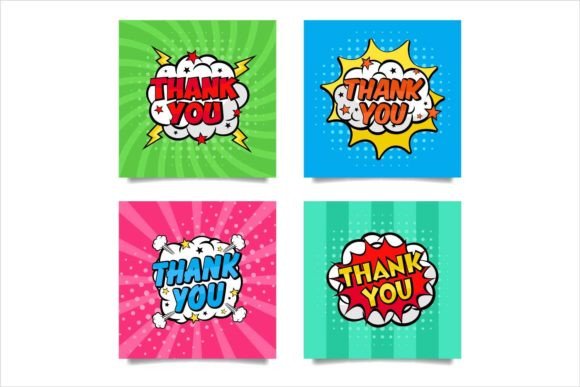
In the evolving landscape of digital design, visual communication often relies on striking aesthetics that capture attention within seconds. The Thank You Pop Art Style Collection represents a specific niche within this broader market, offering a curated set of balloon text pop art comic banner designs. For professionals and hobbyists alike, selecting the right asset pack is not merely about finding an image; it involves evaluating file compatibility, resolution quality, and the versatility of the source formats. This collection distinguishes itself by focusing on the bold, high-contrast energy of pop art while providing technical flexibility for various business applications.
When evaluating design resources, the primary consideration is often how well the assets integrate into existing workflows. The Thank You Pop Art Style Collection is designed with the end-user in mind, specifically targeting scenarios where a "thank you" message needs to be delivered with maximum visual impact. Unlike generic stock photography or flat vector illustrations, these designs leverage the dynamic composition typical of comic book covers, utilizing speech balloons and exaggerated typography to convey gratitude in a memorable way.
Understanding the Core Offerings and File Ecosystem
The utility of any design collection is heavily dependent on the formats provided. The Thank You Pop Art Style Collection includes files in Ai (Adobe Illustrator), Eps 10, Cdr (CorelDRAW), and JPG high-resolution formats. This multi-format approach is significant because it bridges the gap between different software ecosystems. Many designers work exclusively within the Adobe Creative Cloud, while others may rely on CorelDRAW or prefer working with raster images for quick mockups.
The inclusion of Ai and Eps 10 files ensures that users have access to fully editable vector data. Vector graphics are crucial for scalability; they allow a designer to resize a banner from a small social media card to a large billboard without losing clarity. The Cdr format further expands the accessibility of the pack, ensuring that those using CorelDRAW can also utilize the assets without needing to convert proprietary files, which can sometimes introduce errors or loss of quality.
However, potential buyers must consider their software environment before purchasing. As noted in the product specifications, these files are distributed in compressed ZIP or RaR archives. While standard compression tools handle ZIP files natively on most operating systems, opening RAR files typically requires third-party software like WinRAR or 7-Zip. Furthermore, the ability to edit the vector components strictly depends on having the appropriate application installed. If a user lacks Adobe Illustrator or CorelDRAW, they will still possess the high-resolution JPGs for use in photo editing software like Photoshop, but the ability to manipulate the text or individual elements will be limited.
Comparing Vector-Based Collections vs. Raster-Only Options
When comparing the Thank You Pop Art Style Collection to other options available in the market, the distinction between vector-heavy packs and raster-only bundles becomes apparent. Many budget-friendly graphic packs offer only JPG or PNG files. While convenient for immediate use, these lack the infinite scalability required for professional print projects. A raster-based "Thank You" banner might look sharp on a website but could appear pixelated when printed on a large promotional poster.
In contrast, the vector nature of the Ai and Eps files in this collection allows for a level of customization that raster images cannot match. Designers can change the color palette to match brand guidelines, adjust the font weights, or reposition the balloon text elements entirely. This flexibility makes the Thank You Pop Art Style Collection a more robust investment for businesses that require consistent branding across multiple mediums. However, this advantage comes with a tradeoff: the learning curve. Editing complex vector files requires a higher degree of technical proficiency than simply dragging and dropping a JPEG onto a canvas.
Strategic Applications for Business and Personal Projects
The versatility of the Thank You Pop Art Style Collection extends across a wide range of use cases. The comic book aesthetic, characterized by its energetic lines and vibrant colors, is particularly effective for engaging younger demographics or adding a playful touch to corporate communications. Below are several practical scenarios where these assets excel:
- Social Media Covers: The bold nature of pop art stands out in crowded social feeds. These designs can serve as eye-catching cover photos for Facebook or LinkedIn pages, signaling a friendly and approachable brand personality.
- Digital and Print Cards: Whether for email marketing campaigns or physical direct mail, the high-resolution JPGs ensure crisp printing, while the vector files allow for last-minute text adjustments based on recipient names or specific offers.
- Website Backgrounds: The comic style adds character to landing pages, particularly for e-commerce sites thanking customers after a purchase. The dynamic composition guides the user's eye naturally toward the call-to-action or the thank you message.
- Packaging and Merchandise: For businesses selling products, these banners can be adapted for stickers, packaging inserts, or t-shirts. The vector format ensures that the artwork remains sharp regardless of the size of the merchandise.
It is important to note that the effectiveness of these designs relies on context. While pop art is versatile, it carries a specific cultural connotation of fun, retro nostalgia, and boldness. It may not be the ideal choice for industries requiring a strict, minimalist, or somber aesthetic, such as legal services or high-end financial consulting. In those contexts, a more subdued typographic approach might be preferable.
Evaluating the Tradeoffs of Proprietary Formats
A critical factor in decision-making involves the software requirements mentioned earlier. The availability of Ai and Cdr files is a double-edged sword. On one hand, it offers unparalleled editing capabilities for those who own the software. On the other hand, it creates a barrier to entry for users who do not wish to invest in expensive creative suites or who need to collaborate with clients using different platforms.
For instance, if a client sends a request to modify a design but does not have Illustrator installed, the workflow can stall. In such cases, the JPG files serve as a necessary fallback, allowing for basic compositing even without vector editing. Additionally, the Eps 10 format acts as a universal bridge, often compatible with a wider array of design tools than the native Ai format, though some advanced features specific to newer versions of Illustrator may not translate perfectly.
Users should also consider the storage and organization of the ZIP or RaR archives. Before downloading, it is wise to ensure sufficient disk space and familiarity with extraction tools. Once extracted, organizing the files into logical folders (e.g., separating vectors from rasters) can streamline the design process. Neglecting this organizational step can lead to confusion later, especially when managing multiple design projects simultaneously.
Decision Factors: When to Choose This Collection
Selecting the Thank You Pop Art Style Collection should be driven by specific project needs rather than a desire for novelty alone. This resource is best suited for users who prioritize scalability and customization. If your workflow involves frequent resizing of graphics for both web and print, the vector files included in this pack provide a distinct advantage over static image libraries.
Furthermore, the collection is ideal for brands looking to humanize their communication. The comic book style inherently suggests a narrative and a personal touch, which can be highly effective for customer retention strategies. When a business thanks a client, the tone matters. A standard, sterile graphic may go unnoticed, whereas a vibrant pop art banner can create a moment of delight and reinforce a positive relationship.
Conversely, readers should explore alternative options if their primary constraint is software availability or if the desired aesthetic is more traditional. There are many excellent resources available that offer SVG formats compatible with web development environments or PDF templates optimized for desktop publishing without the need for vector manipulation. Additionally, if the goal is purely for internal presentations where print quality is not a concern, a lower-cost raster-only pack might suffice, saving both money and processing time.
Ultimately, the value of the Thank You Pop Art Style Collection lies in its balance of artistic flair and technical utility. By providing a mix of editable vectors and ready-to-use rasters, it caters to a broad spectrum of design needs. However, success with these assets requires a clear understanding of the tools at hand and the specific demands of the intended medium. Whether used for a simple digital card or a complex marketing campaign, the key is to align the bold energy of pop art with the strategic goals of the business.
For those ready to invest in a design resource that offers both visual impact and functional flexibility, this collection presents a compelling option. The combination of high-resolution outputs and cross-platform compatibility ensures that the effort put into designing with these assets pays off in the final result. As always, the best design choices are those that solve a problem effectively, and in the realm of digital gratitude, few styles communicate appreciation quite as loudly as pop art.